How We Fix It
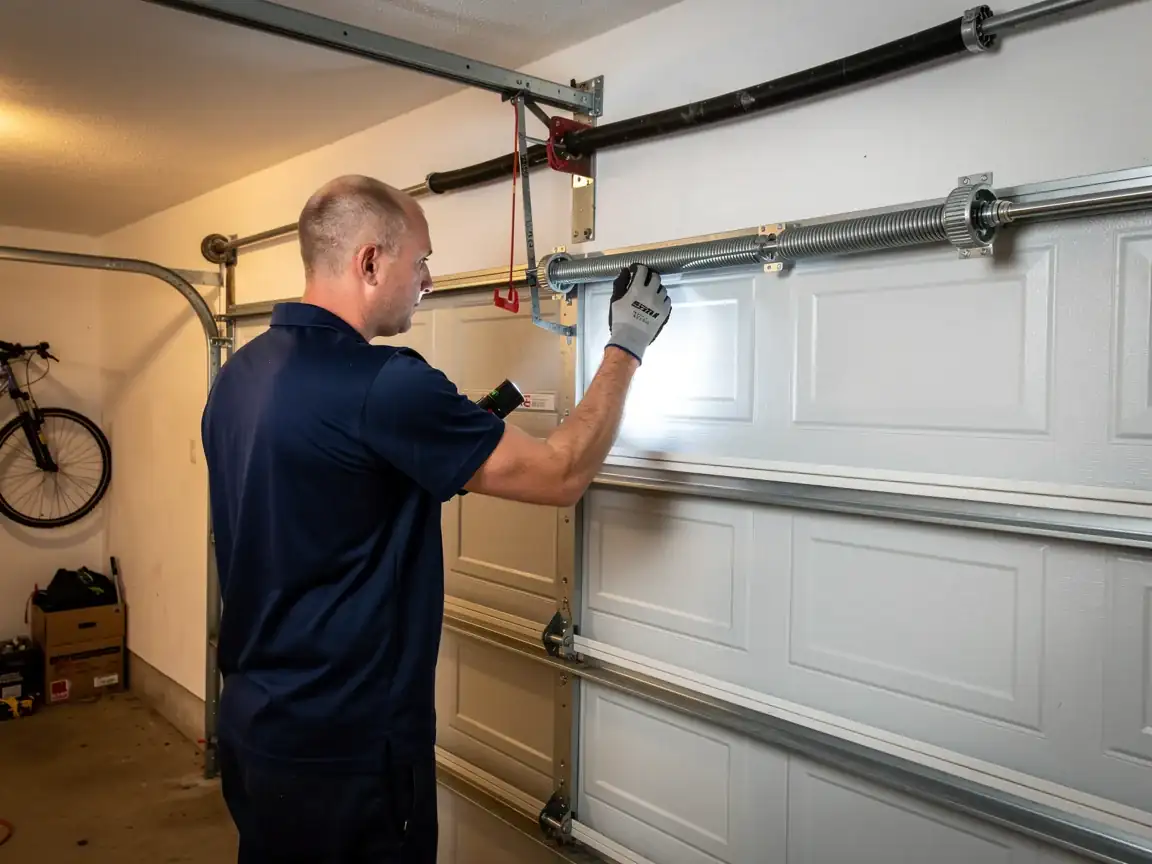
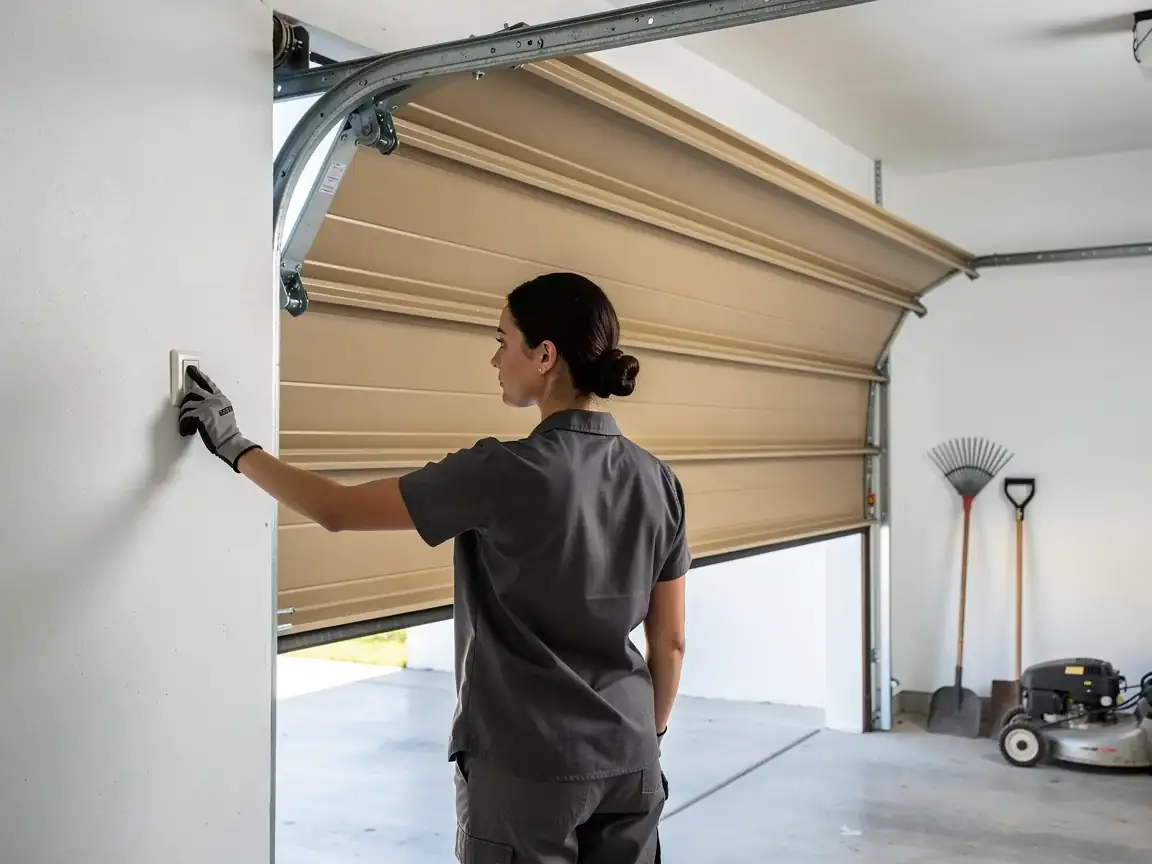
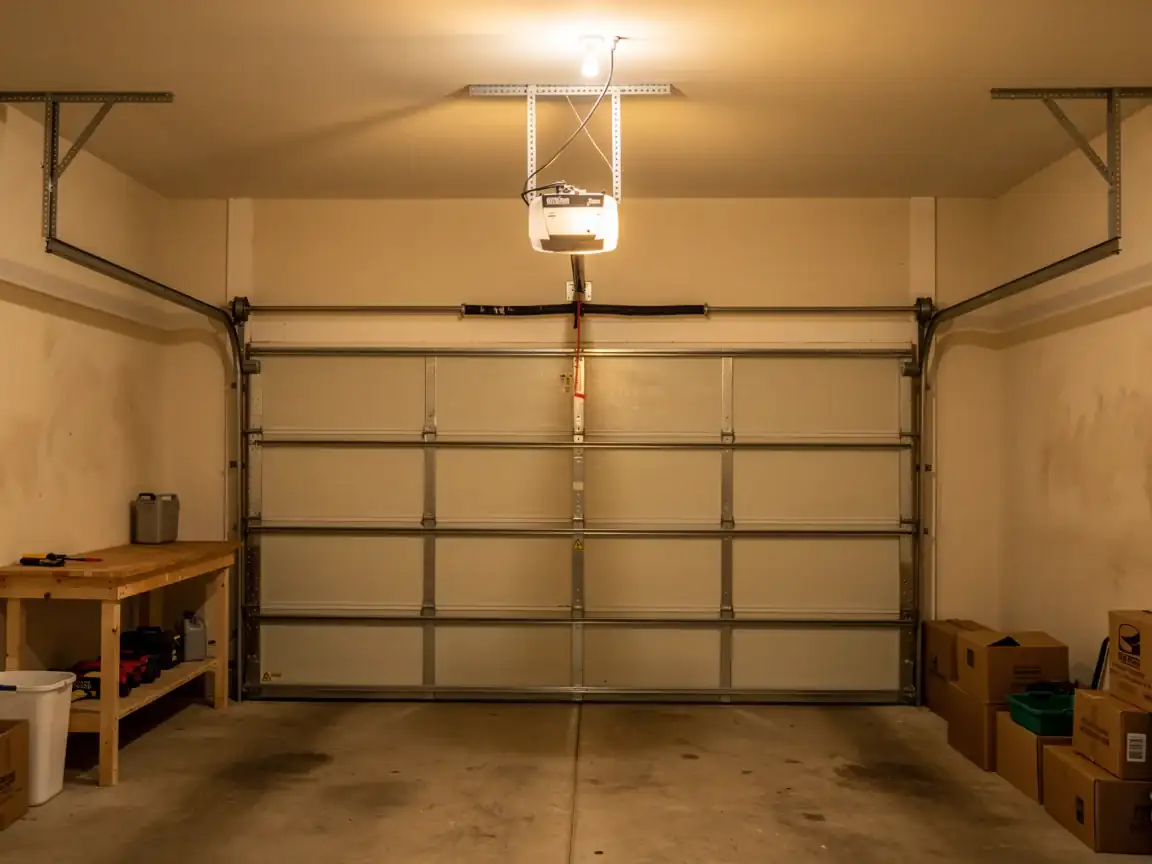
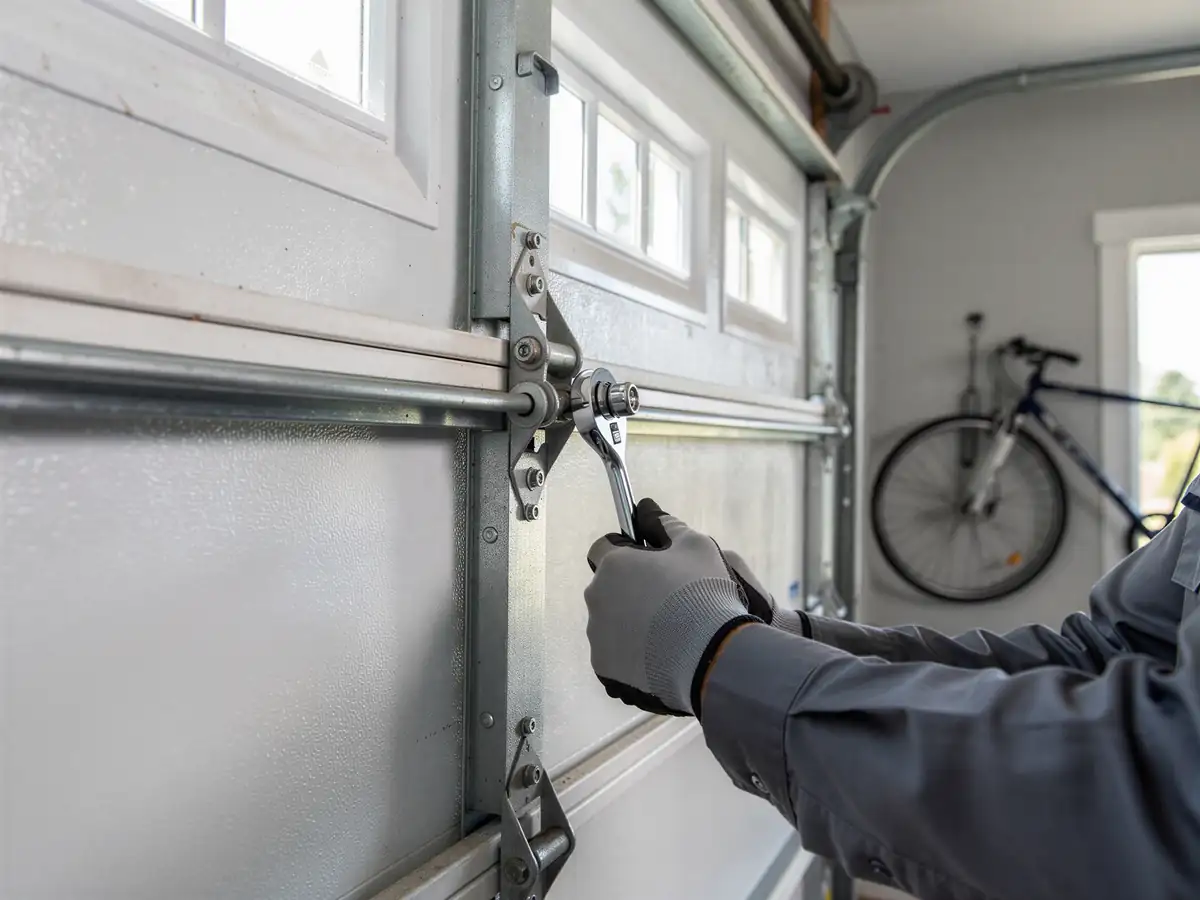
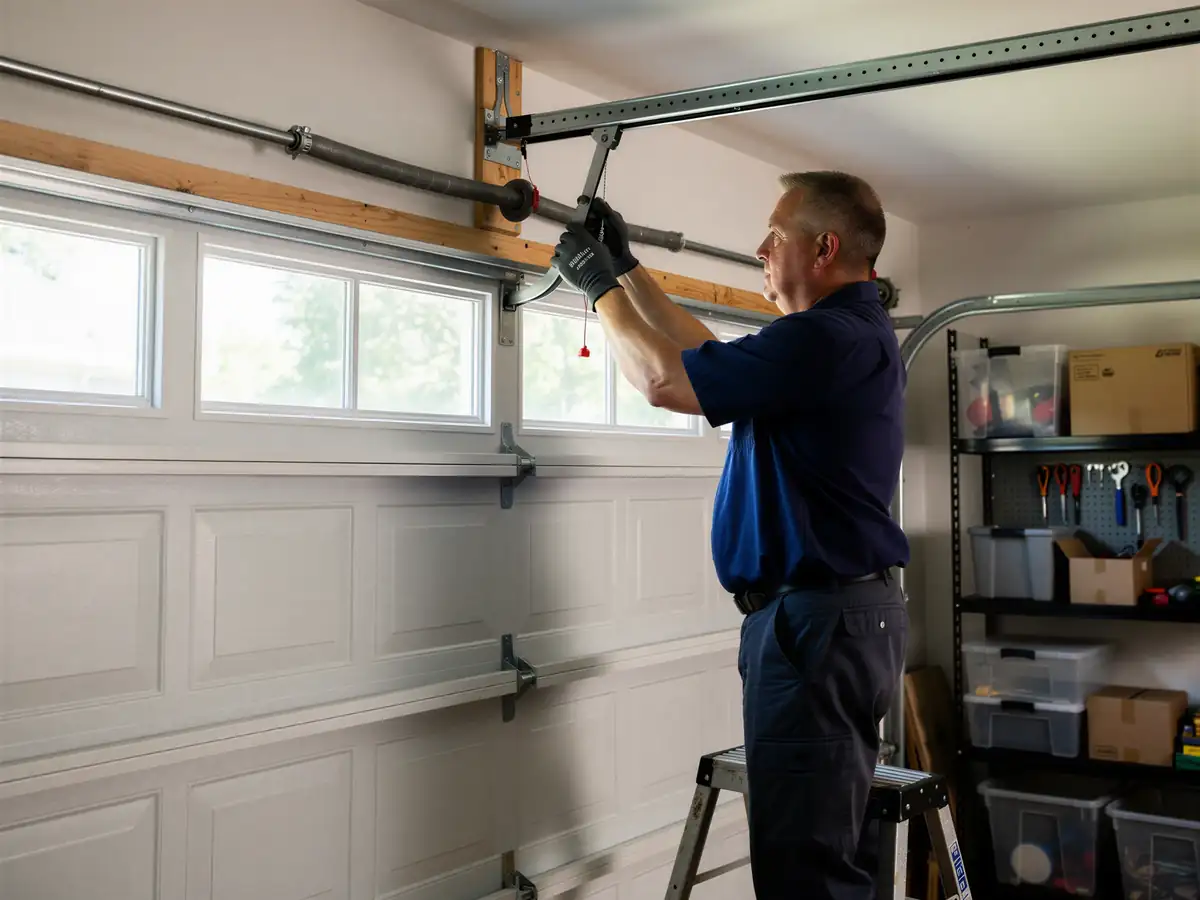
We pull the old opener, check the header and the track mount for cracks or rot - common on a structure pushing 45 years old - and either reuse the existing rail if it's square and solid or replace it if it's bowed. Then we mount the new motor, run the wiring to the wall control and any keypad, set the travel limits, and test the force settings so the door doesn't slam or stall. On a lot of these original builds the wall button is wired straight through old low-voltage cable that's brittle by now; we'll tell you if it needs to be replaced rather than just reused. Safety reversal sensors get aimed and tested every time, no exceptions, regardless of what was on the door before. If your garage has a side-mount torsion setup instead of the usual overhead spring, the bracket work for the opener changes a little, and we'll walk you through that on site rather than guess over the phone.
How Long You Are Without the Door
A straight swap - same rail, same mount, no header work - is a same-visit job once the truck is out there. Add header reinforcement or a damaged track, which turns up more often on the 1978-vintage garages than on newer construction, and the visit runs longer because we're not just bolting on a motor, we're rebuilding the point it hangs from. We drive from Redding, six miles in, so we're not staging a crew out of Palo Cedro itself - one visit is the plan, but we need to know what we're walking into. If we find rot in the header once we're up there, we'll tell you on the spot what it adds to the clock rather than disappear and reschedule. We don't carry every bracket size on the truck for every decade of framing, so an odd one can mean a short parts trip.
Why It Happens Here
A door built the same year as a 1978 house has been through four decades of Redding-area summer heat on its springs and bearings, and openers get replaced on their own schedule somewhere in there - usually not at the same time as the spring system, which is why we so often find a newer motor bolted to an older, tired rail. With roughly 1,206 households spread across Palo Cedro, this isn't a dense subdivision market where every garage was built off one template; it's a mix of eras close to that 1978 mark, and each one carried whatever hardware the builder used that year. The severe-heat climate band across the service area dries out nylon gears and bearing grease faster than it would in a milder spot, which is part of why an opener that looks fine in spring can grind by August. None of that is unique to this one street or that one street - it's the combination of the build era and the heat load that keeps showing up on the jobs out here.
Where This Job Goes Sideways
The install goes sideways when the header above the door turns out to be undersized or split and nobody notices until the new opener is already hung and pulling on it. It also goes sideways when a homeowner assumes a noisy opener means a bad motor, when on these older garages it's just as often a bent or narrow original track doing the work loudly instead of smoothly. We'll flag both before we start, not after. Palo Cedro sits six miles from Redding, inside the close ring of towns we drive out to, so scheduling isn't the issue - the issue is always what's hiding behind the trim once the old unit comes down. If the header needs real carpentry, that's outside an opener install and we'll say so rather than patch around it.