Serving Redding, CA & nearby
(530) 239-0896
Redding, CA

What a Service Call Covers in Redding

A straight look at what a Redding garage door service call covers, built around this town's 1938-2000 housing stock and severe summer heat, not generic checklist advice.

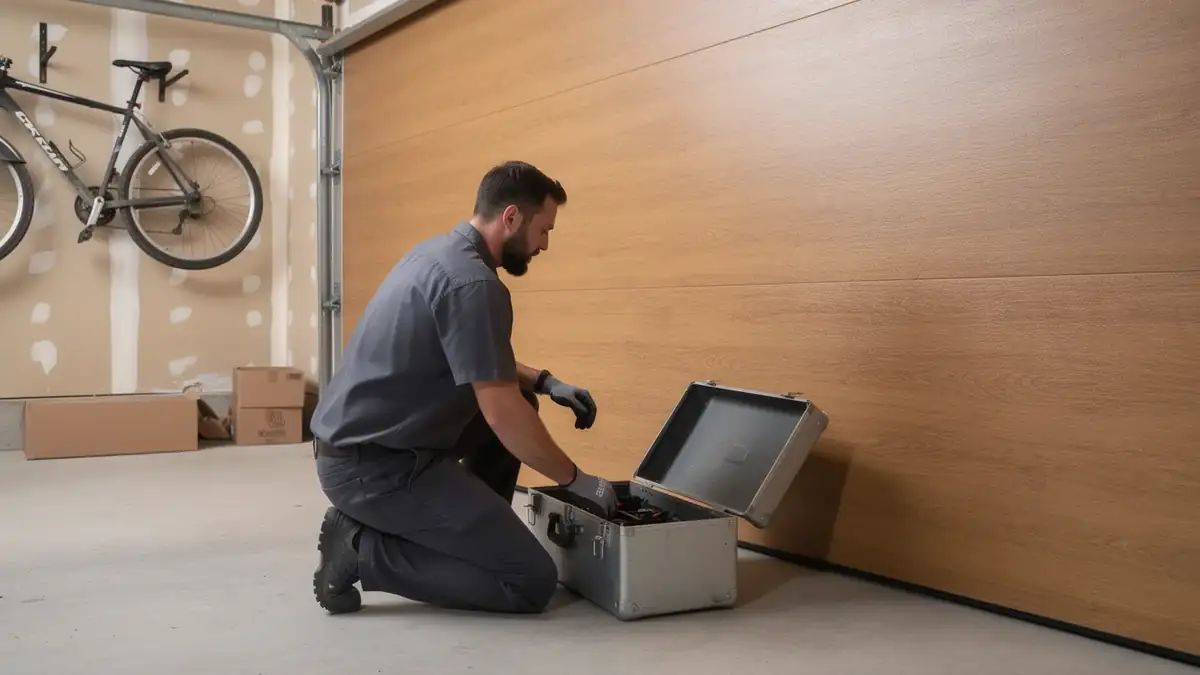
A technician kneels, reaching into an open toolbox in front of a wood-look garage door.

How Local Conditions Play In

Most of the housing stock around Redding went up between 1938 and 2000, with the bulk of it dating to the 1980s and 90s across the twelve areas we work in. That median build year of 1980 matters because it tells us what's behind the door before we open the truck. A door from that era is usually on its second or third opener, sometimes its original spring, and the hardware brackets were sized for the panel weight standards of that decade, not today's heavier insulated doors. On a service call here, we're not guessing at generation - we're checking whether a 1980s track system has been asked to carry a replacement door it was never spec'd for. Redding also sits in a severe heat band, and that changes what fails first. Heat doesn't just fade paint - it dries out lubricant, swells wood jambs on older framing, and puts extra load on nylon rollers and plastic idler bearings that were fine in a milder climate. A call here starts with those two facts: how old the bones are, and how hard the heat has worked them.

The Problem

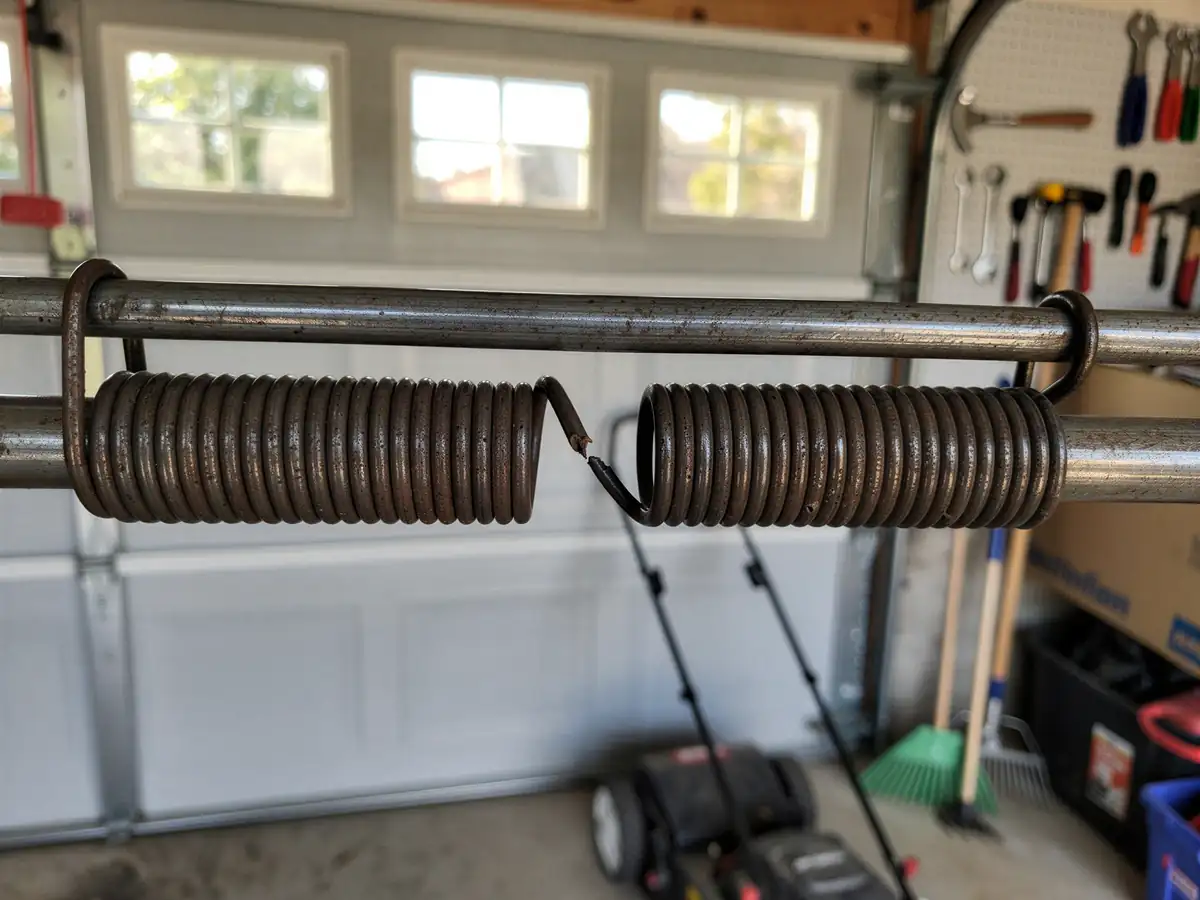
The problem isn't that doors break - every door eventually does. The problem is that a lot of Redding's 1980s and 90s-built garages have mismatched systems: an original torsion spring sized for a lighter door, paired with a heavier insulated replacement panel installed sometime in the last fifteen years. Nobody checks the math when a homeowner swaps the door face without swapping the spring. Add in a summer that pushes the garage interior well past outdoor temperature, and you get metal fatigue that shows up faster than it would in a cooler market. We also see a lot of original galvanized cable starting to show rust pitting on houses from the 1938-1970 end of the build range, especially where the garage isn't fully enclosed. A service call has to separate the actual failure - a snapped cable, a cracked roller - from the underlying mismatch that caused it. Fixing the part without addressing the mismatch just buys you a few more months before the next call. That's the honest version of what's wrong out here, and it's specific to the mix of old hardware and new heat load this area deals with.

Season by Season

Spring and fall are when we get ahead calls - homeowners noticing a door that's started sagging on one side or an opener that's grinding before it lifts. These are good months to catch a spring that's lost tension gradually rather than snapped outright. Summer is different. With Redding's severe heat band, lubricant on older rollers and hinges thins out and runs off faster than it should, and steel components expand just enough to bind in tracks that were installed decades ago with less tolerance built in. That's when we see the most emergency calls tied to broken springs and stuck openers, concentrated in the hottest stretch of the year. Winter calls here tend to be lighter - this isn't a freeze-thaw climate working against the door - but houses in the 1938-1960 range sometimes show jamb movement that's been building all year and finally shows up as a door that won't seal evenly. None of this is dramatic weather. It's steady heat load wearing on hardware that, across a lot of these houses, has already been in service for thirty to eighty years.
When It Stops Being a DIY Job

Lubricating hinges, tightening loose bolts, clearing the track of debris - that's reasonable to do yourself, and we'd rather you did it than ignored it. Where it stops being a DIY job is the spring. A torsion spring on a double door is under enough tension to cause real injury, and on the older 1980s-era systems common around here, the mounting hardware itself may be original and more brittle than it looks. We also don't recommend homeowners touch cable replacement on houses from the earlier end of the build range, where corrosion can be hiding inside the drum, not just on the visible strand. Here's the honest limit on our side too: if a door's structural frame has shifted enough from decades of heat cycling that the opening itself is out of square, that's a carpentry problem before it's a garage door problem, and we'll tell you that rather than force a door into an opening that's fighting it. Knowing which failures are mechanical and which are structural is most of what a service call is actually for.

How it works

From “it’s stuck” to “it’s fixed”

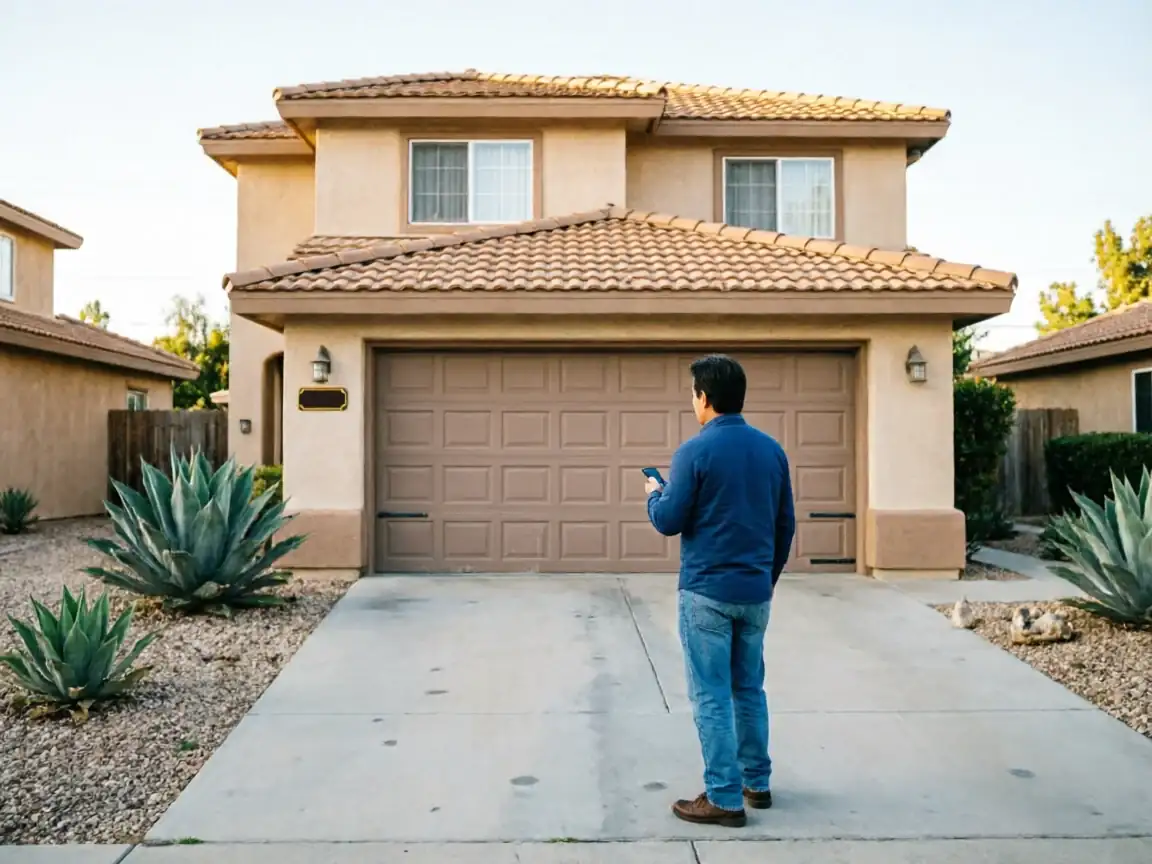
A man stands in a driveway looking at his phone in front of a house with a brown garage door.

Tell us what’s wrong

Describe the symptom - won’t open, loud bang, opener runs but the door won’t move.

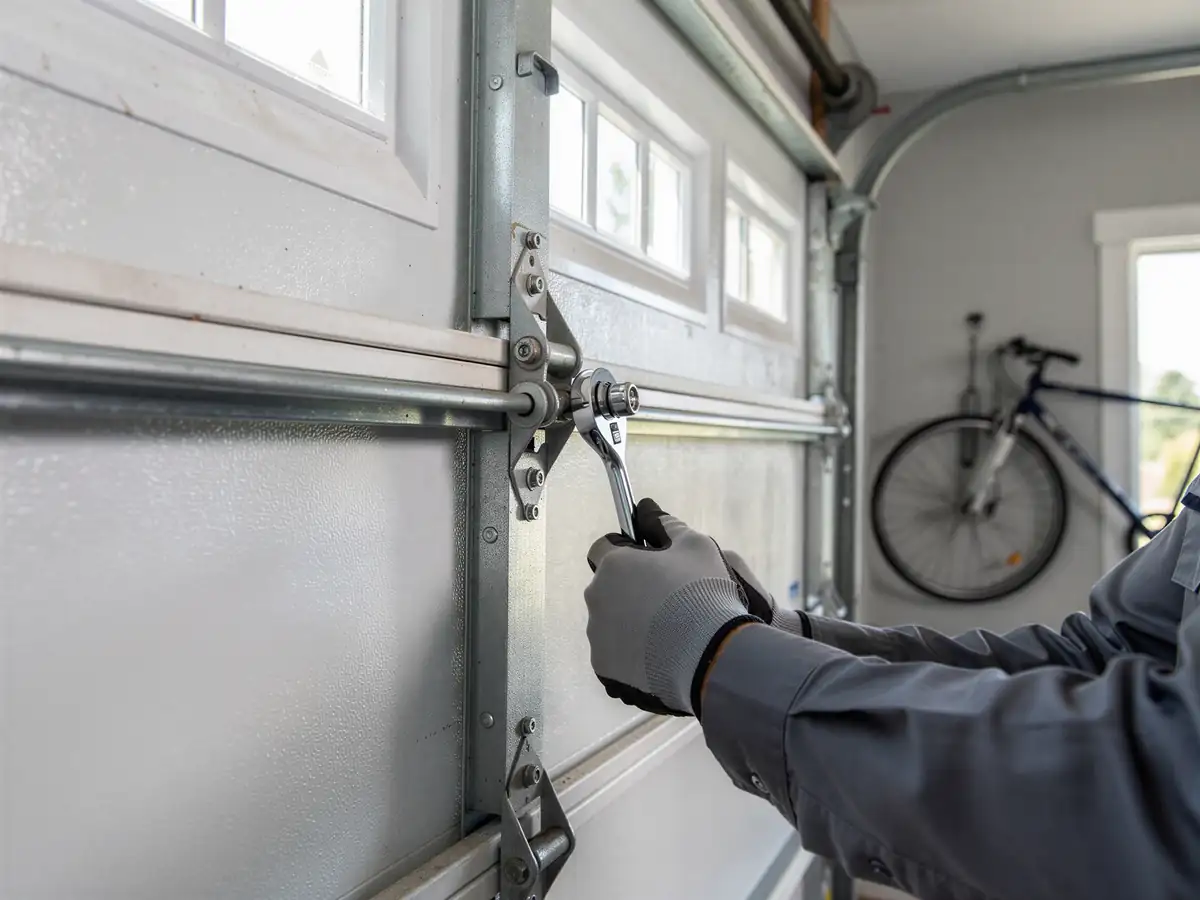
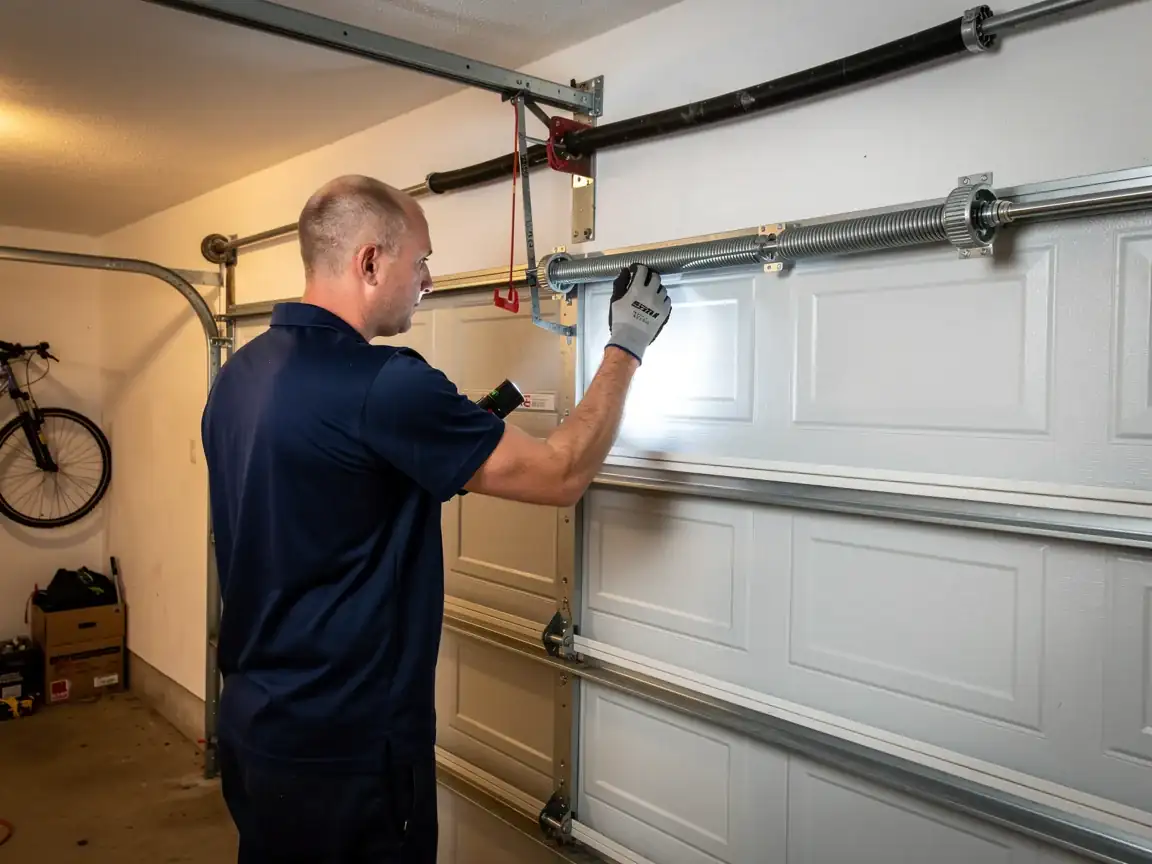
A technician shines a flashlight on a garage door torsion spring.

On-site diagnosis

A technician tests the door under power and by hand and finds what actually failed.

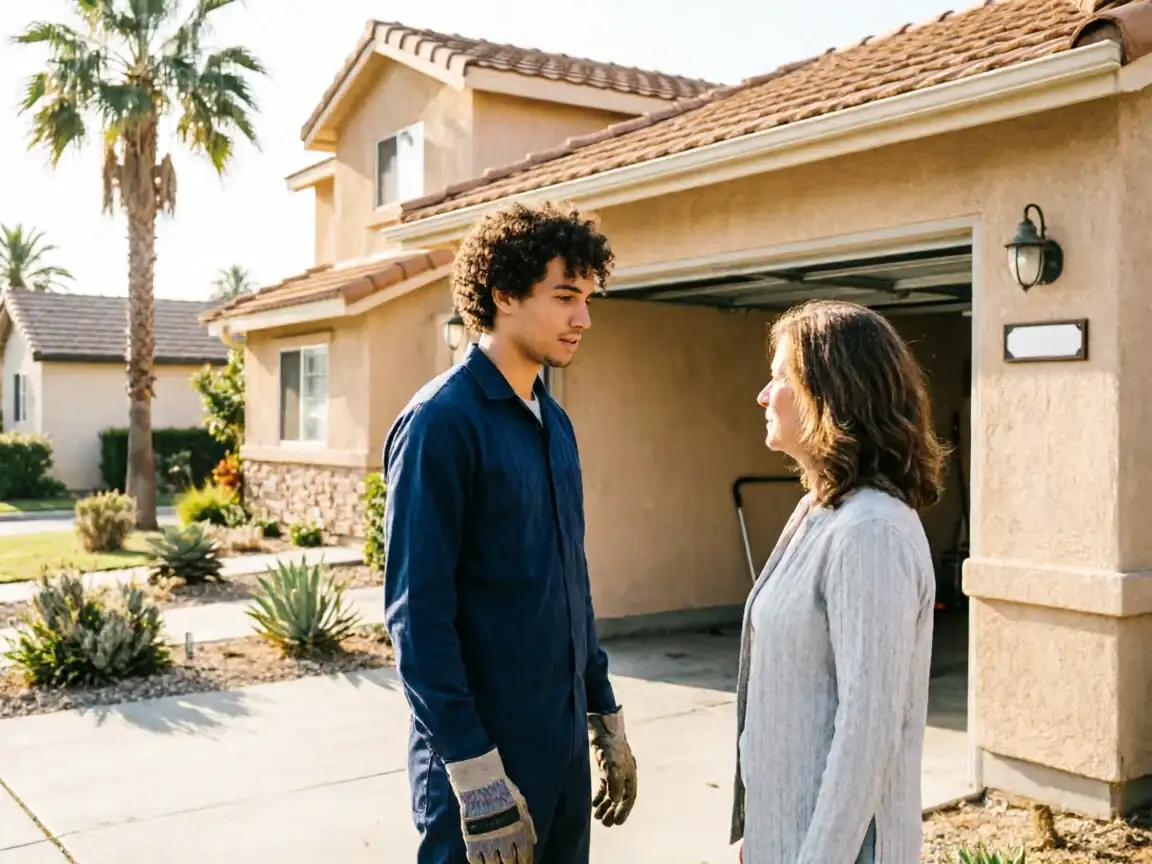
A technician in a blue uniform talks to a woman in front of a house.

Clear, up-front plan

You get the fix that’s needed and what drives the cost - before any work starts.

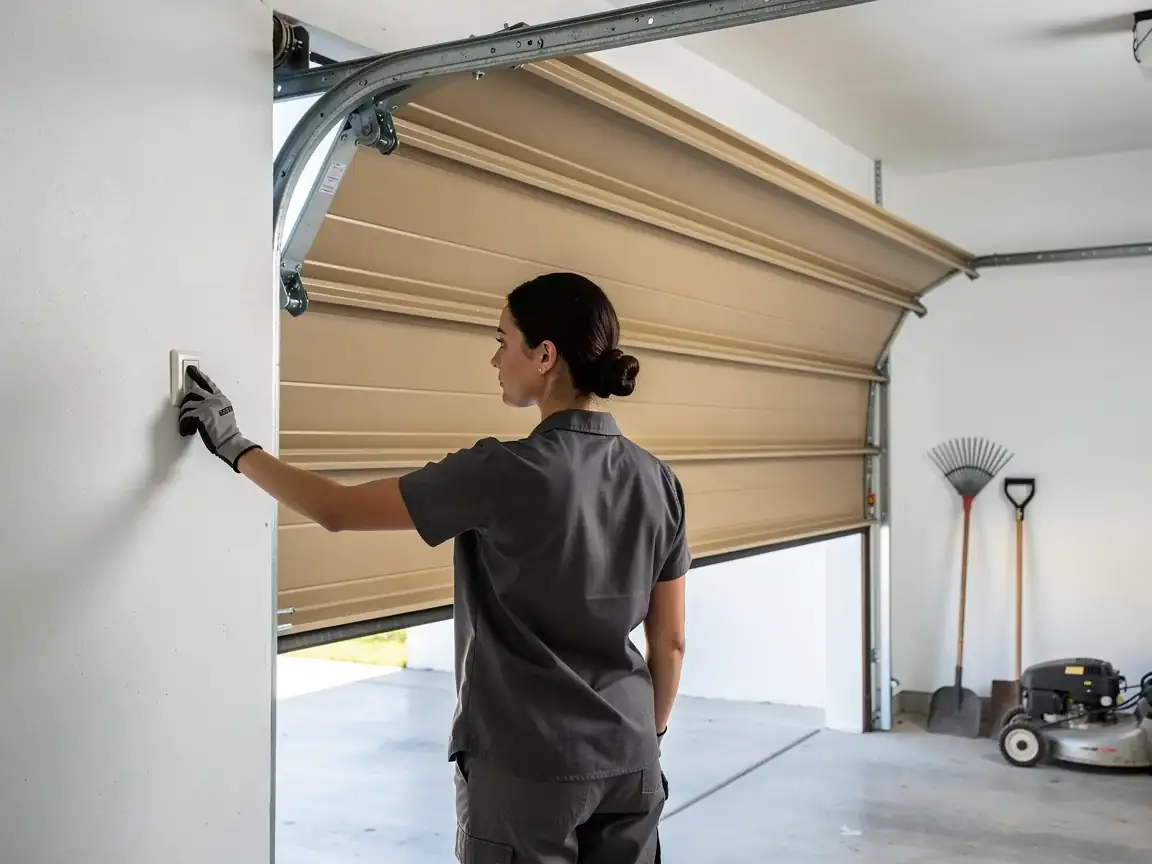
A technician in gray work clothes presses a button to open a tan garage door.

Repaired & tested

The repair is done, the door is set true and tested, and the work area left clean.

Next step

Not sure which repair your door needs in Redding, CA? Describe what it’s doing - every job starts with a diagnosis.

How we work

What to expect

Diagnosis firstEvery visit starts by finding what actually failed - not a pre-written parts list.
The right part for the doorSprings and openers matched to the door’s weight and age, so the fix holds up.
Straight answersWhen a repair makes more sense than a replacement - or the reverse - you hear it plainly.
Clean, careful workTension released safely, hardware set true, the door tested under power before we leave.
What we do

Garage Door Services

Repair and installation work for Redding homes and businesses.

Questions

Frequently asked

Straight answers about garage door repair in Redding. Still unsure? Ask us directly.

Why do garage door springs seem to fail more in summer here?

Redding sits in a severe heat classification, and that heat thins lubricant and expands metal components faster than in milder climates. Springs that have been quietly losing tension all year tend to finally give out during the hottest stretch, which is why summer is our busiest season for broken-spring calls.

Is my garage door opener too old to repair?

It depends on the unit, but a lot of houses in this area were built in the 1980s and 90s and are still running openers from that period or the generation after. We can usually tell quickly whether parts are still available or whether replacement makes more sense than another repair.

Can I replace a cable myself?

We don't recommend it, especially on older homes in the 1938-1970 range where corrosion inside the drum isn't visible from outside. A cable under load that lets go can whip hard enough to cause injury, and that's not a risk worth taking to save a service call.

Ready to get your garage door sorted?

Tell us what it’s doing and where you are in Redding - we’ll take it from there.

Request a QuoteCall