Why It Happens Here
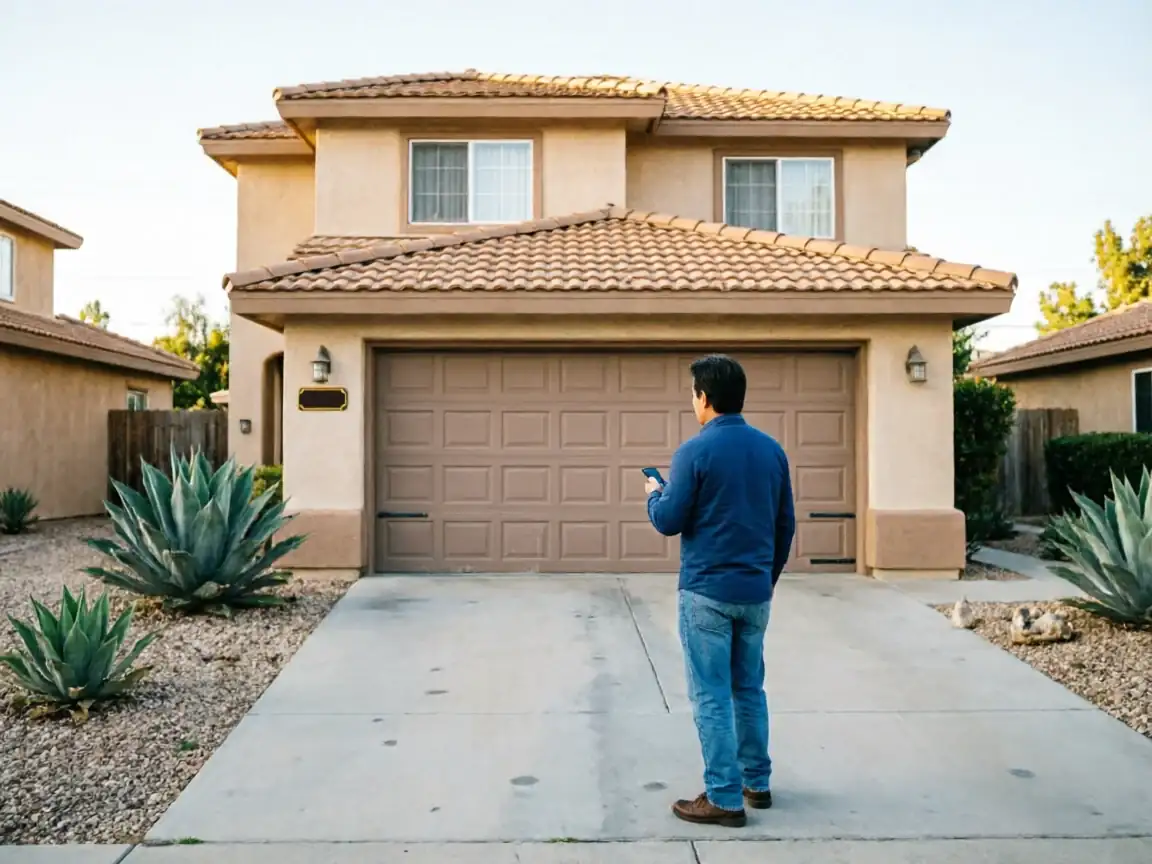
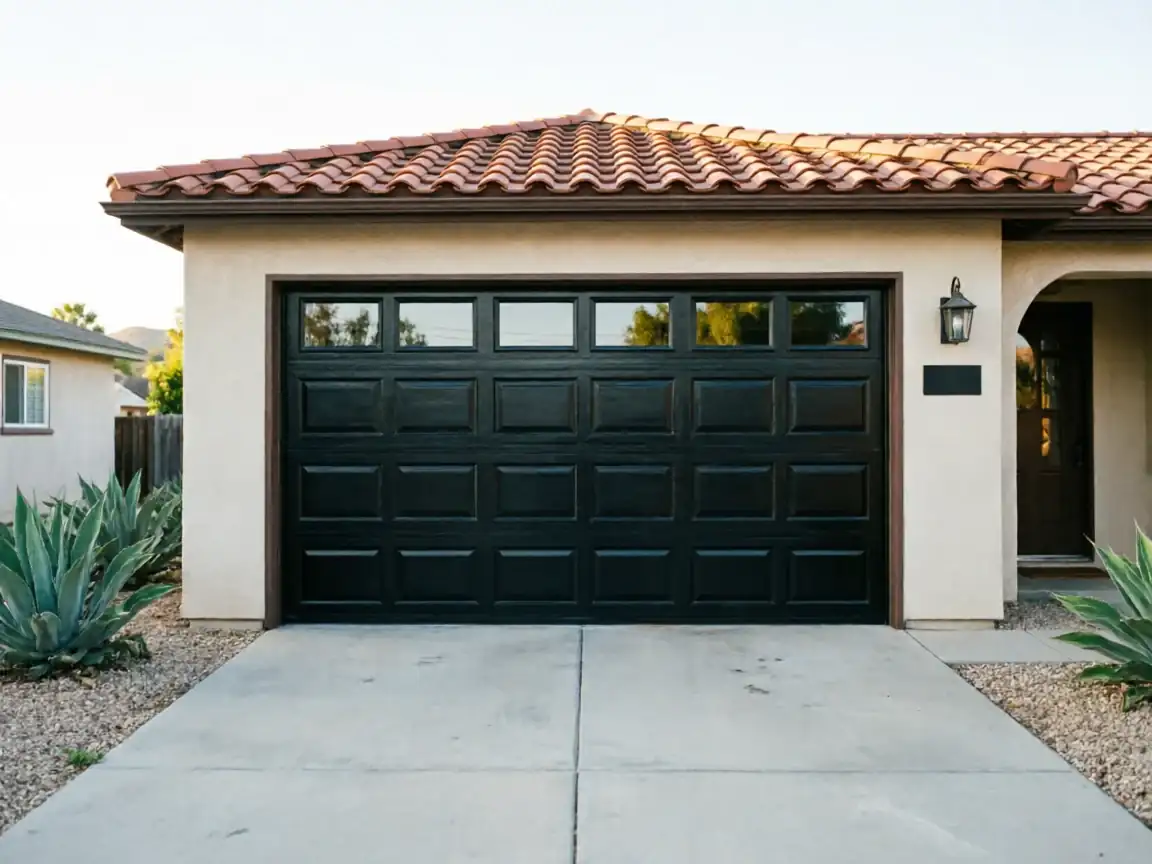
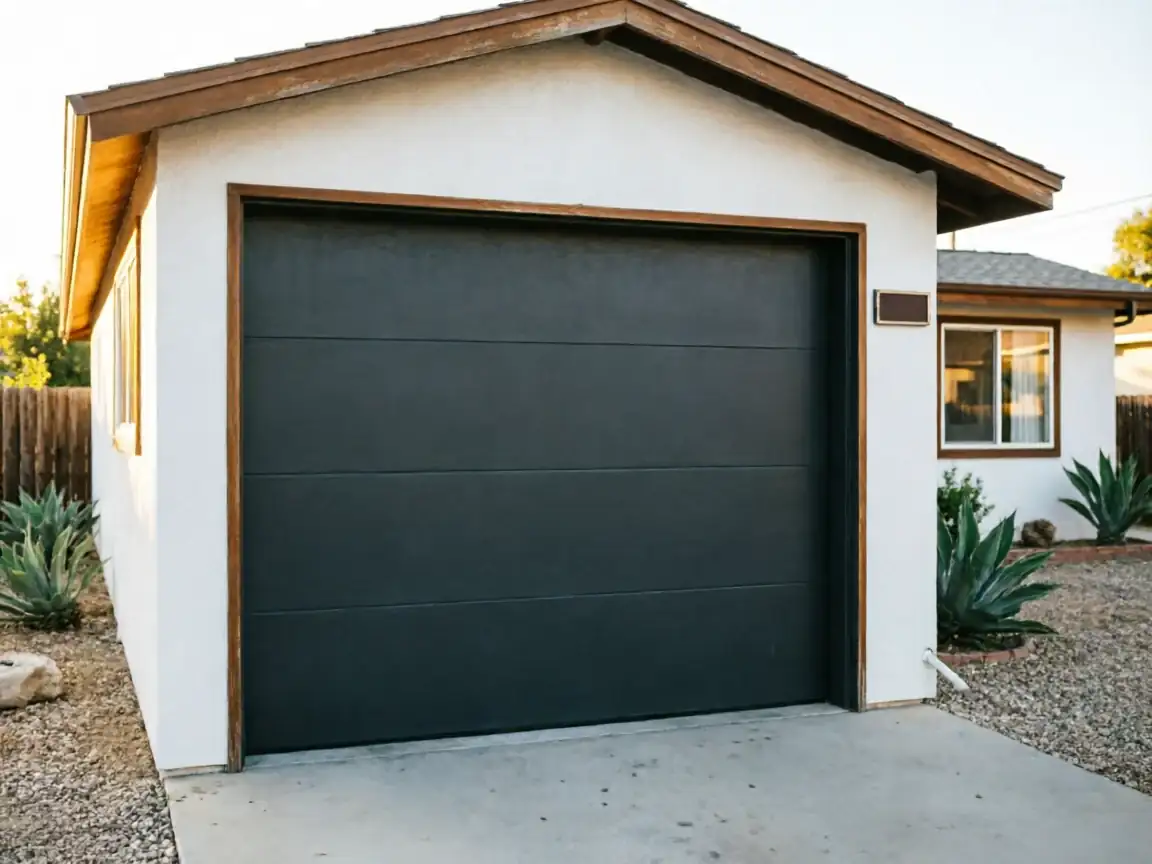
Most of the housing stock across the Redding service area went up between 1938 and 2000
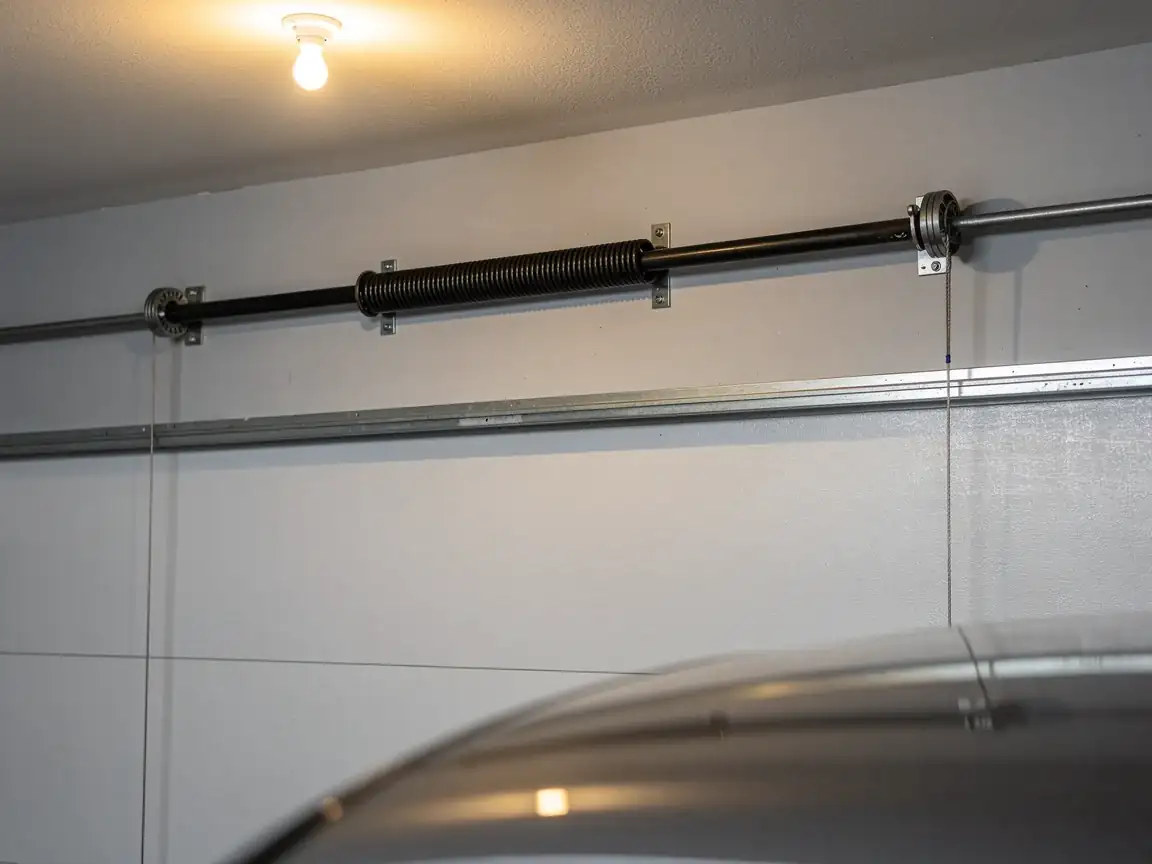
With the bulk of it dating to the 1980s and 90s across the twelve named areas we work in. That matters for springs because a torsion or extension spring is rated for a set number of open-close cycles, and heat cuts that number down. Redding sits in a severe heat climate band, and a garage that bakes all afternoon pushes steel past its rated life faster than a shaded, temperate one would. The metal expands and contracts every day in summer, and that daily stress fatigues the coil wire from the inside, long before it looks worn from the outside.
Houses built in that 1980s-90s window often still carry their original spring
Especially if the door itself was swapped out at some point but the spring wasn't. A 30 to 40 year old spring that has never been replaced is not a maintenance item anymore, it's a countdown. We see this pattern across the service area regardless of which named area the house sits in, because the building era and the climate are the same across all of it.
- 40 year
A spring doesn't fail because of bad luck
It fails because it hit its cycle count, and heat gets it there sooner.
The Symptom
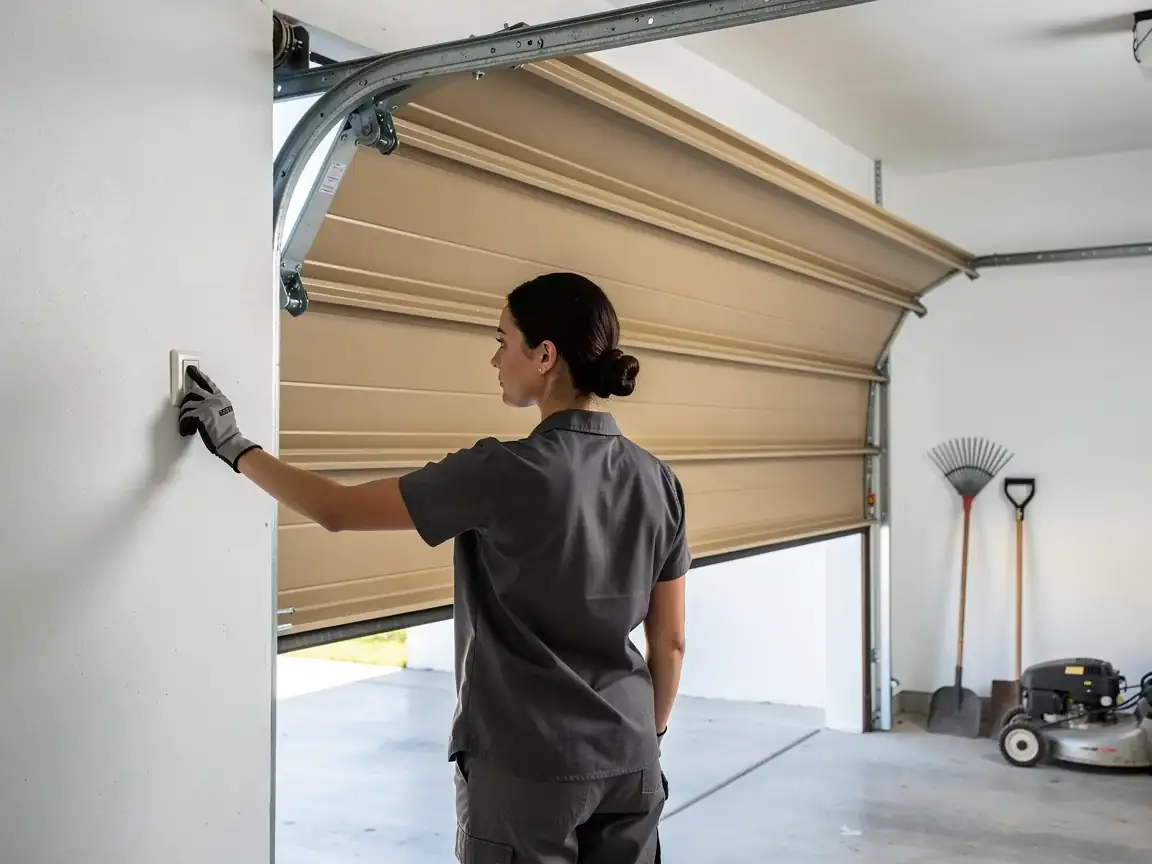
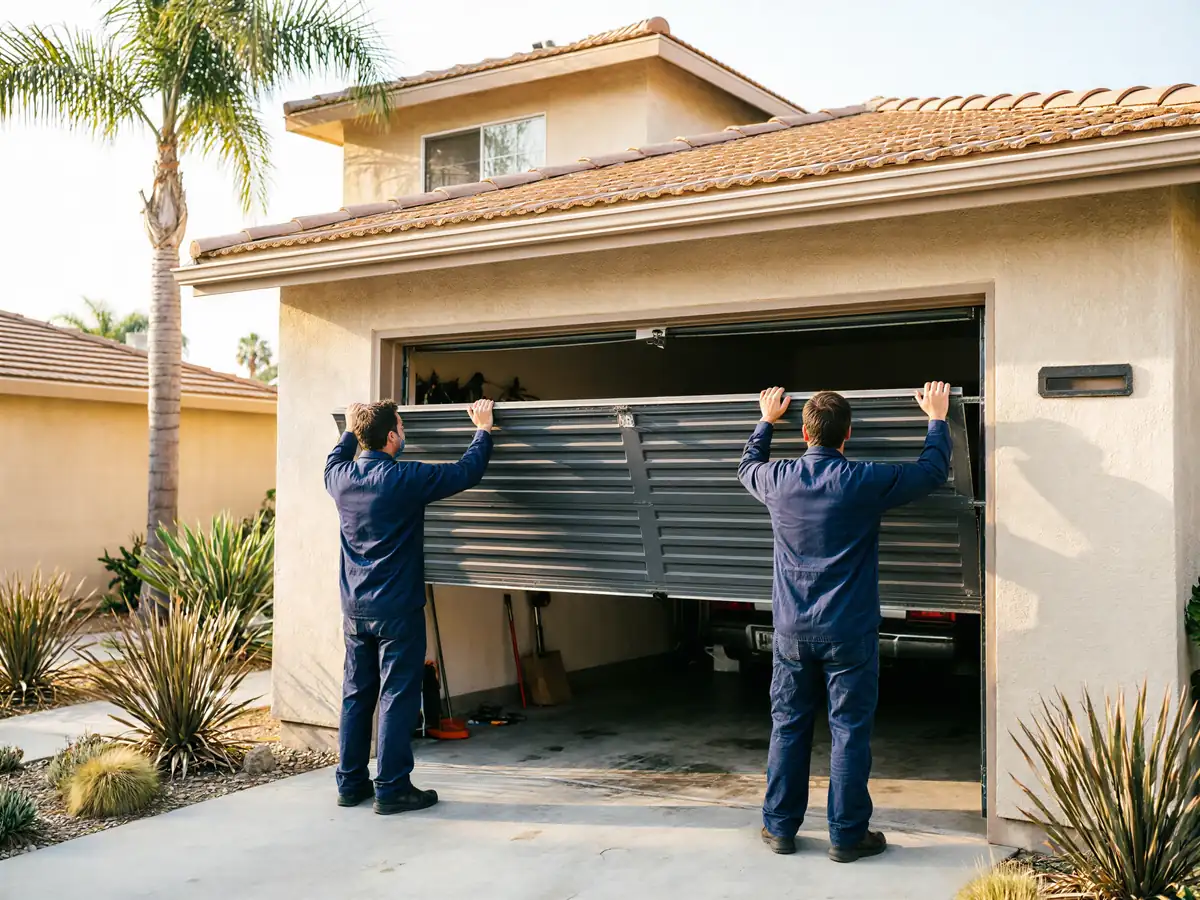
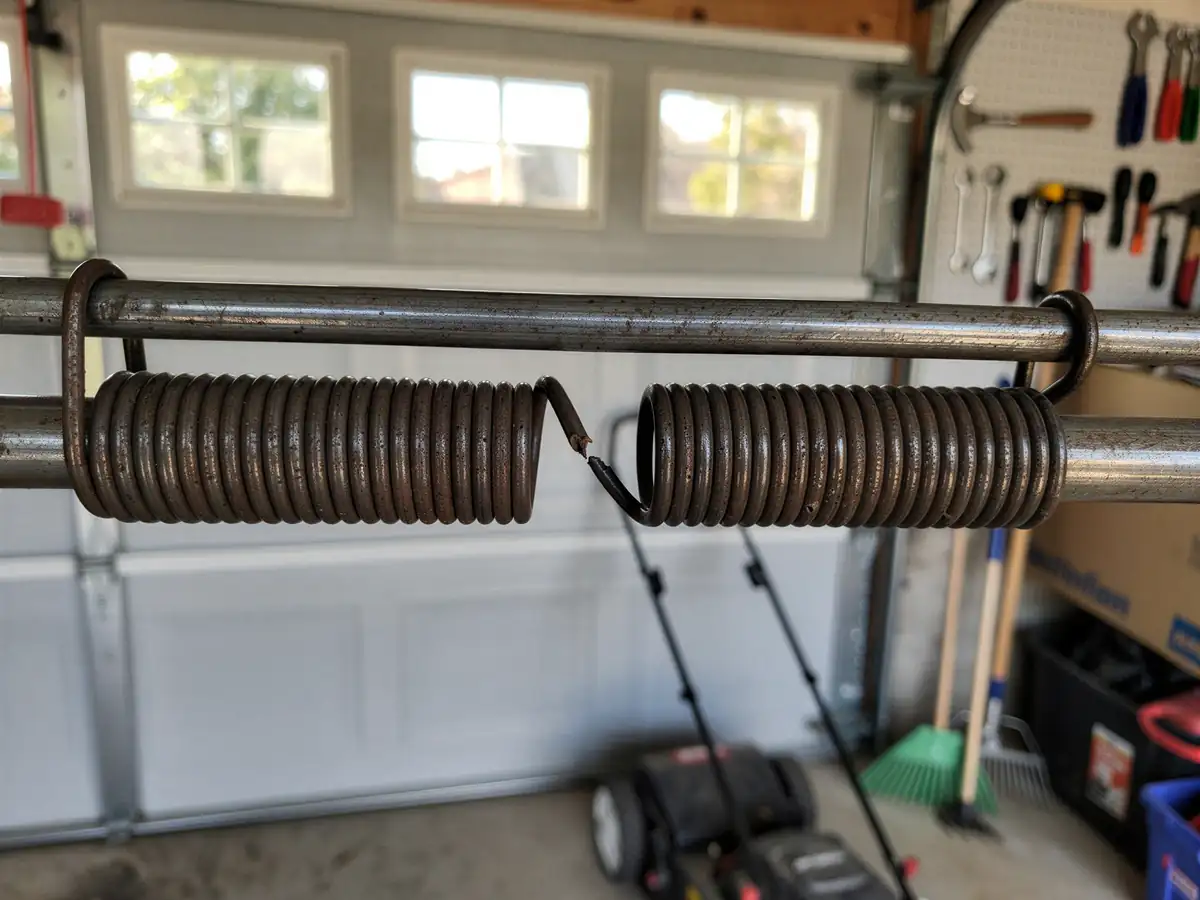
The most common call we get is a door that won't budge, with the opener straining or clicking but the door barely lifting off the floor. That's a broken torsion spring, almost always on a double-car door where the single spring is doing more work per cycle than on a single-car opening. Sometimes it's one of a pair of springs, and the door moves but tilts to one side as it rises, cable sagging on the broken side.
Other signs show up before the full break: a loud bang from the garage (that's the spring letting go, often when nobody's home), a door that feels unusually heavy when lifted by hand with the opener disconnected, or a door that reverses itself partway up. If you can lift the door by hand and it stays up on its own, the spring is probably fine. If it drops the second you let go, the spring has lost tension or already failed.
We won't tell you to keep opening a door with a broken spring by forcing the opener through it. That strains the opener motor and the track hardware, and it turns one repair into two.
How to Book
If your door is stuck down, won't lift, or you heard a bang from the garage, reach out through our site at / and we'll get details on your door, including age if you know it, before a truck heads your way. Torsion springs are sized by wire diameter, coil length, and the weight of your specific door, so a tech needs that information to bring the right part rather than guessing on-site.
If you're not sure whether it's the spring or something else, like a broken cable or a worn roller, describe what you're seeing. A door that's heavy and won't stay up points to the spring. A door that's noisy but moves fine usually points elsewhere, and we'd rather diagnose it right than quote a job we haven't seen.
How We Fix It
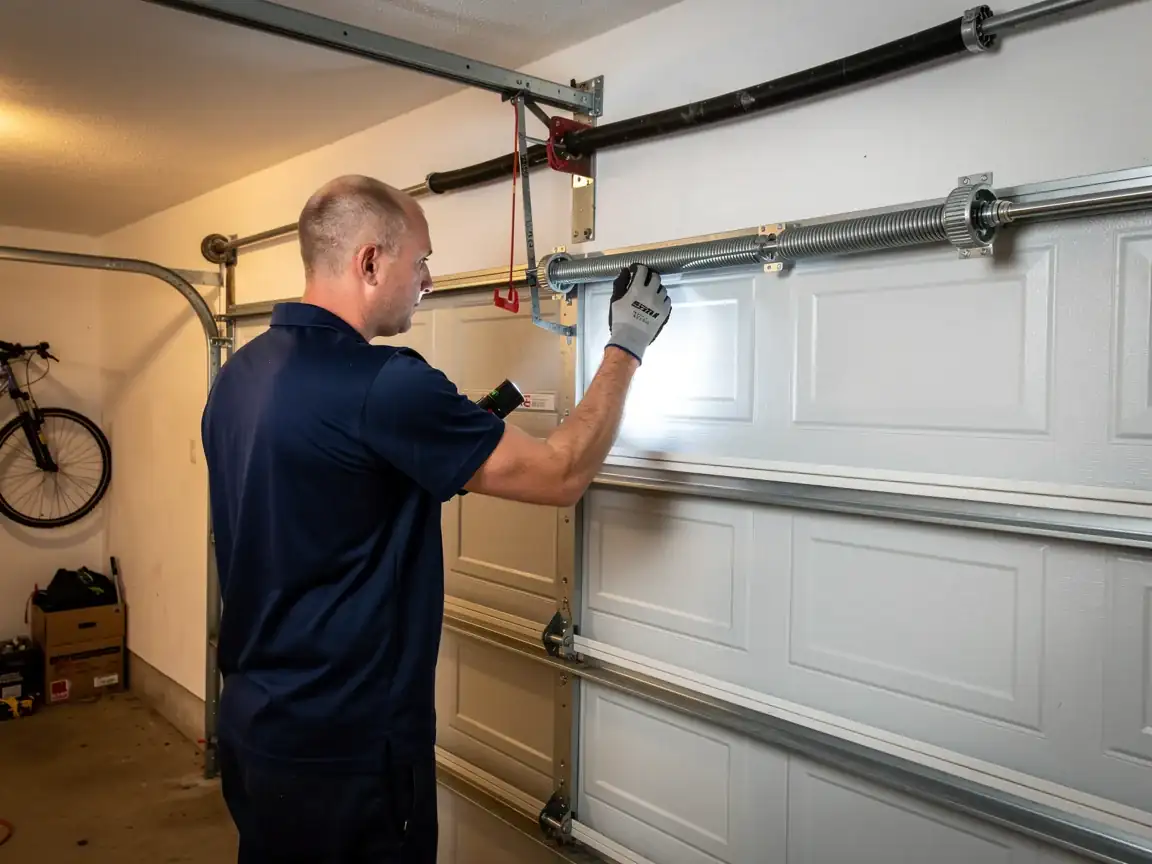
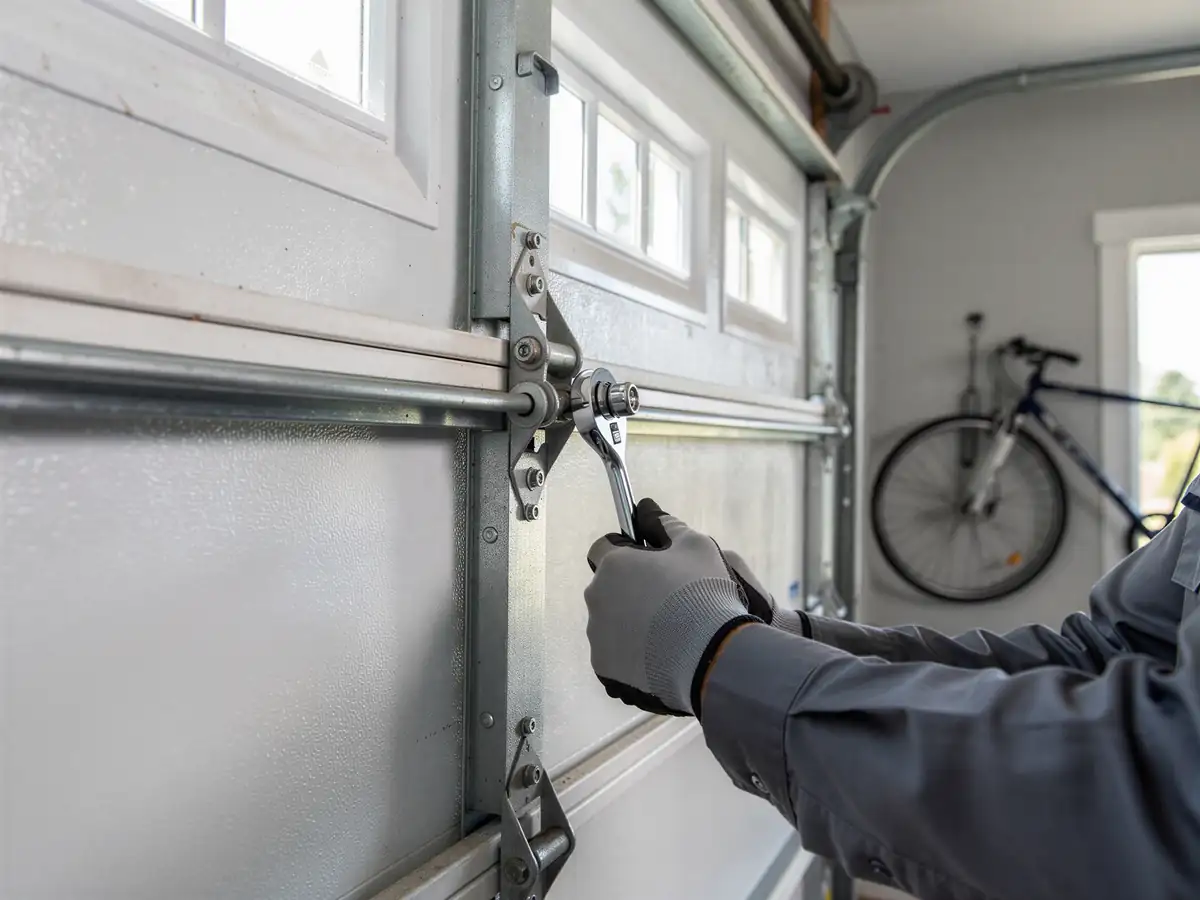
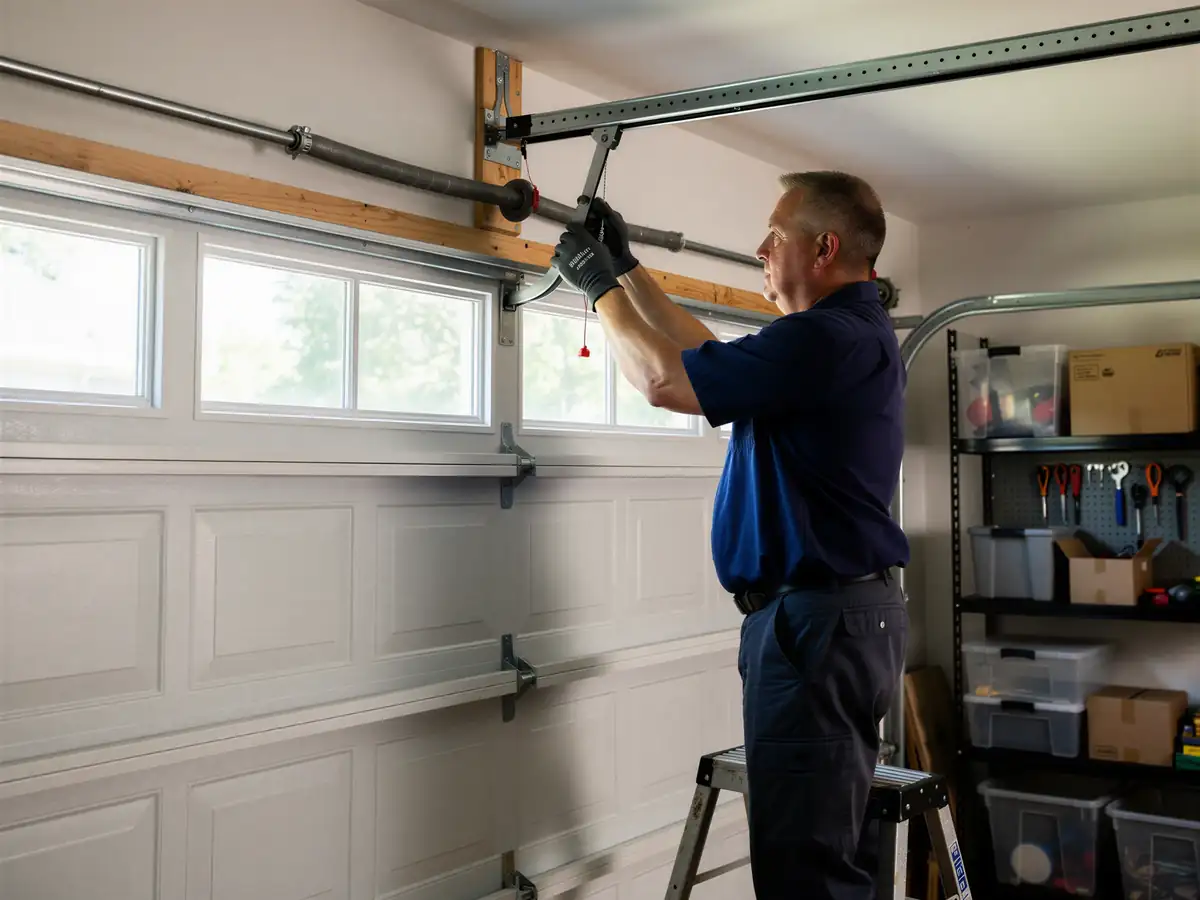
Torsion spring replacement means winding down the old spring under tension, pulling it off the shaft
And installing a new one matched to your door's weight and cycle life, not just whatever fits the shaft diameter. For the 1980s-90s stock that makes up most of the housing here, that often means upgrading from the original spring spec to one rated for more cycles, since the original was likely never built to handle 30-plus years of daily heat-cycled use.
Extension spring setups, more common on older single-car doors from the earlier end of the 1938-2000 range
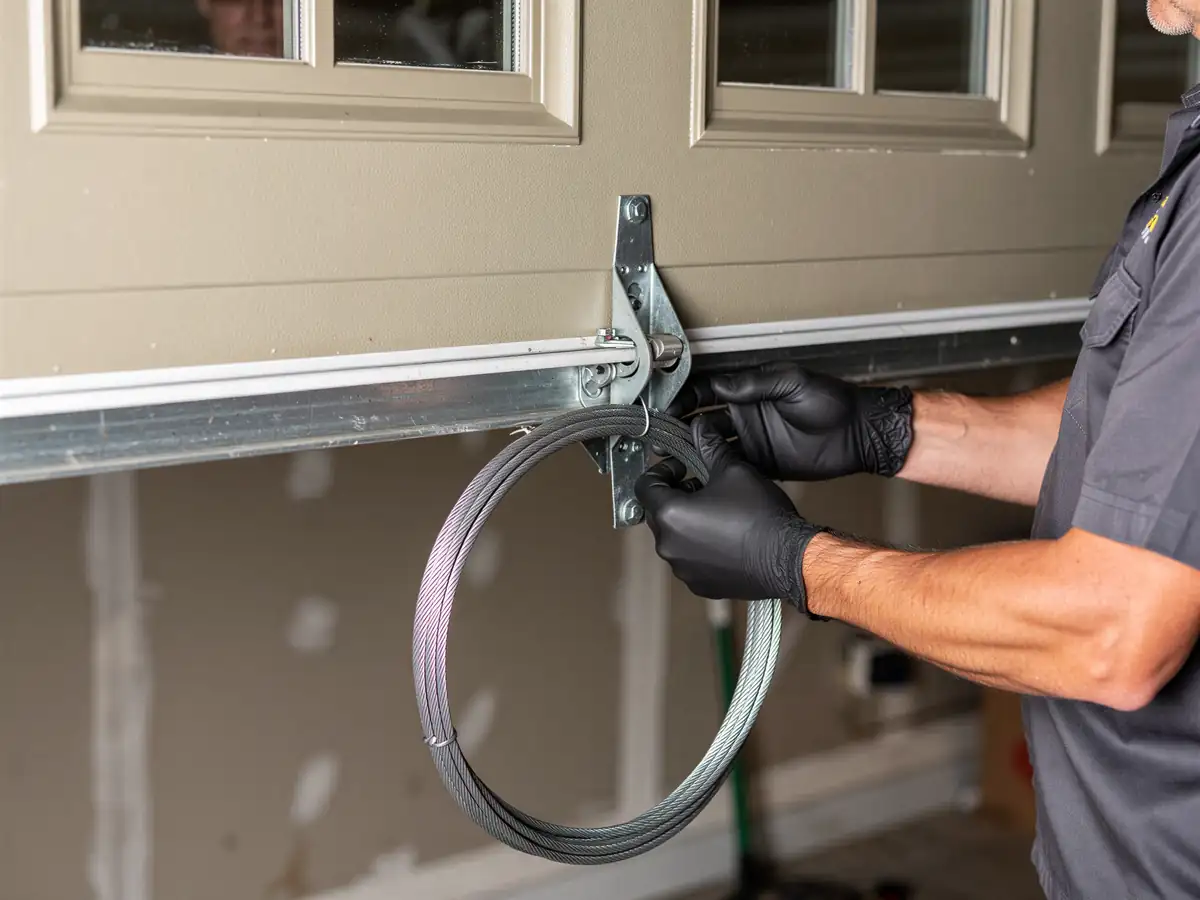
Get replaced in pairs even if only one has broken, because a mismatched pair just means a second service call in a few months. We always check cables, pulleys, and the drum at the same time, since a spring failure often stresses those parts too.
One limitation worth saying plainly
If your door panel sections themselves are warped or rusted through, a new spring won't fix a door that's failing structurally. At that point we'll tell you replacement is the better money, not a repair that buys you a few more months.